
projects/projekte > Overtures – shameless and unlimited
Sustainable Sanitation Design, Norway
in partnership with overtures - Participants of step 1Serafine Lindemann (artcircolo), curator
Empfangshalle, artists
Kalle Laar, artist
Peter Trautwein, industrial design
Thomas Bader, biologist
Martin Richartz, computer scientist
Innovation and culture for Sanitation 20.11
There has no progress been made in 20 years in creating a better sanitation service to the poor! What created the complexity of sanitation – why the pain – how can this be the no. 1 killer in the world and at the same time a service others take for granted? How did this great divide take shape and how can we communicate this challenge to the millions of people that take it for granted?It is beyond belief that 2,6 billion people and among them 1 billion urban citizens live in such squalor – can we picture the situation of hundreds of thousands of people living on a few square km of compacted shit and waste? Do we listen – can we hear it – is it possible to understand – is it visible to us - can we care or should we continue not giving a shit?
Our world is complex and we have to deal constructively with cultural diversity, the worldwide recession, income inequality, climate change, the dependence on fossil resources and a demographic development that will strain us in the future.
A paradigm shift seems to be long overdue to implement a sustainable economy and to ensure the sensible use of our resources. The future perspective - beginning today - needs to deal with embracing all of our growing knowledge.
What values need to be redefined, conserved or rediscovered? What needs to be changed regarding the limitations of our resources, the changing climate and the wasteful practices that we assume to be value creation? How can innovation and new ideas be communicated in this setting?
What does a lifestyle look like that is based on sustainability in view of future generations? How promising are alternative lifestyles and living conditions? And what level of personal responsibility do we take for our local and international actions? Do our governments inspire us to change or are they dragging their feet? What is the role that art can play in creating new visions for an essential paradigm shift?
How can this be communicated?
The working basis for a trans-disciplinary cooperation is to bring together a relatively small group with great diversity in skill, outlook and talent. The common thread is our willingness to give to a topic that will challenge our perspectives and transform the way we look at communicating difficult issues.
The idea
Putting up for discussion to visualize, develop and realize selected works. Together with transdisciplinary local and international participants from technology, science, design, art and politics we work on possible future scenarios concerning sanitation in order to prepare the public for a value-change in environment and society.
Step 1 – 2011
One week discourse with all partners together to experience, develop and create the road to public communication of the new sanitation concept. The mass of evidence, facts and possible results from quality service delivery of sanitation to 100% of the population will be communicated and discussed during the first workshop.
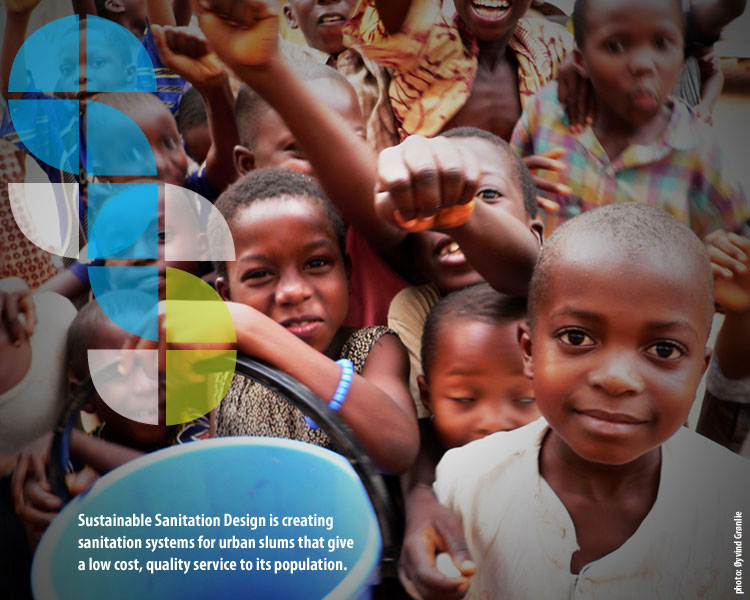
How does the sanitation issue encompass the challenges that the world is facing?
What are the tools we can bring to this issue?
• Dignity
• Health
• School attendance
• Living conditions
• Modern agricultural bankruptcy
(Current industrial agriculture isn't sustainable and the sanitation solutions for the future are linked to reuse of nutrients)
• Future sustainable agriculture
• Slow food - local production of natural and safe fertilizer
• Climate positive growing systems
• A childhood without diarrhea